

Why Fertigation Matters in Sugarcane
Agriculture and horticulture efforts, particularly sugarcane cultivation, are currently facing rising input costs, water scarcity, and a need for higher productivity. A drip irrigation system is highly suited for both irrigation and fertigation for a sugarcane field. This system delivers water and nutrients directly to the root zones of the sugarcanes and can do so over a long period. Sugarcane is a long-duration crop that requires consistent irrigation and fertilisation throughout its growth. Using a drip irrigation system thus increases yield potential, resulting in better sucrose content in sugarcane that is juicier and sweeter, and enabling efficient fertiliser use. Fertiliser efficiency can rise up to 80–95%, and fertiliser usage decreases by 20-30% with the drip irrigation system that employs fertigation.
Understanding Fertigation in Drip Irrigation Systems
What is Fertigation?
Fertigation is the method of fertilising a field, garden, or orchard by mixing fertiliser with water and delivering it via a precision irrigation system. The fertiliser, of course, has to be water-soluble, so that it can be delivered through the same system as water. Since a drip irrigation system delivers the water to the root zones to encourage better absorption, the same applies to the fertilising nutrients. The dual action of distributing water and fertiliser is achieved through fertigation via drip irrigation for sugarcane cultivation. It is the right nutrient at the right time in the right place.

Why It Works for Sugarcane
Fertigation via a drip irrigation system works exceptionally well for sugarcane cultivation because it delivers nutrient-rich water directly into the root zones of the stalks. Sugarcanes are long-duration crops and can take 10 to 18 months to reach full maturity. Nutrients delivered directly to the root zone during this time period can be readily absorbed if the fertiliser is well mixed with the water. There is minimal nutrient and water leaching away from the sugarcane plants, and virtually no water or fertiliser waste. Only the proper amount of water and nutrients is delivered, and that is all absorbed by the plants. The water delivery is uniform, and so is the nutrient uptake.
Key Principles of an Effective Fertigation Schedule
- Split application vs bulk fertilisation : Split application of fertilisers means the fertilisers are being applied over a period of time, whereas bulk fertilisation means fertilising at one point, usually when planting the seedlings of cut joints. Given the long duration of sugarcane cultivation, split application is the more appropriate fertilising system, but a bulk fertilisation of appropriate nutrients at planting may also be beneficial.
- Crop stage-based nutrient demand : For sugarcane, the basic nutrients that are important requirements are phosphorus(P), nitrogen, and potassium for proper plant growth. Phosphate is usually applied at planting time, when the roots have to emerge from the cut stems. Phosphate during this time helps sugarcane stems develop a strong root system. Nitrogen (N) and potassium (K) are best applied during the tillering and growing seasons and help plants grow faster and better, providing a good estimate of yield. During tillering, additional shoots emerge from the main shoot, determining the final number of sugarcane stalks.
- Soil type and climate considerations : Sugarcane grows best in soil that is loamy, loose and with a water table that is 2 meters below the topsoil. Textured loam, sandy loam or clay loam are all applicable. The soil has to be loose and cannot be hard-packed to encourage width growth. The oil also needs to be basic and treated if acidic or alkaline. As for climate conditions, a single sugarcane stalk requires an annual rainfall of between 1100 mm and 15000 mm, evenly distributed throughout the year. Tropical or subtropical temperatures are the best, and sunlight is required in excess. Humidity is more important during the grand growth phase, but not as much during the maturing state, so as to encourage better sucrose yield.
- Irrigation–fertigation synchronisation : Irrigation fertigation synchronisation is matching the nutritional and irrigation needs of sugarcane at different stages of growth. Continuous feeding at the appropriate time and amount ensures plants never face nutrient stress, maximising growth potential. The amount of water or nutrients the plants need at a particular stage of their growth may differ from other times, but managing this distinction throughout with a drip irrigation system is far easier to schedule. The best irrigation and fertigation synchronisation can increase crop yield by almost 30-50% per cycle, while saving on water by about 50% and on fertilisers at 25%-30%.
Sugarcane Growth Stages and Nutrient Demand
Sugarcane is a long-duration crop and takes many months to reach maturity. One harvest cycle can be broken into distinct agronomic phases, spanning 10-18 months. Each phase will have different nutrient and water needs, and irrigation and fertigation will need to be scheduled accordingly.
A. Germination Stage (0–45 Days)
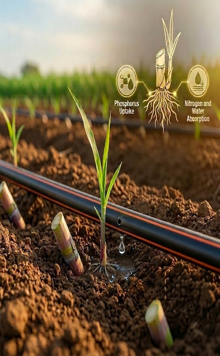
- Focus: This is where the sugarcane stems are cut and planted in the field. The kloamy and loose soil will help the cut stems grow roots and enable them to absorb the required nutrients and water. The cut stems will need enough to encourage growth and set the pace for how many shoots may emerge.
- Nutrients: This is the time to make a heavy fertiliser drop. Since stems must form roots and shoots, phosphorus-rich water should be delivered along with a small amount of starter nitrogen. These two nutrients will have the greatest positive effect on plant growth and ensure proper germination.
B. Tillering Stage (45–120 Days)
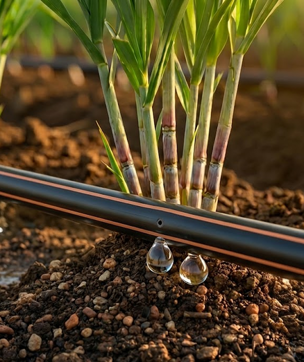
- Focus: During the tillering stage, each cut stem will have grown all of its functional roots and will next exhibit shoot multiplication. From each stalk, a number of shoots will come up, which will go on to grow into proper stalks next. One stem can accommodate only a limited number of shoots and eventual stalks.
- Nutrients: The most important nutrient that has to be delivered via the subsurface drip irrigation system is a high dosage of nitrogen to encourage the growth of shoots and enlarge the root zones. Sugarcane has one of the largest root systems among row crops, and it needs these nutrients to reach its full potential.
C. Grand Growth Stage (120–270 Days)
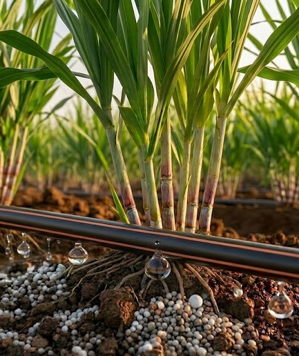
- Focus: The grand growth period is the stage of rapid biomass accumulation. This is when the sugarcane grows in both length and girth, becoming the huge stalks they are meant to be. They grow so much that they can increase by 1-4 cm per day at the height of this phase.
- Nutrients: The grand growth stage occurs concurrently with a high demand phase, where balanced NPK fertiliser needs to be fed very quickly to the sugarcane. Their absorption rate is highest at this rate, and they need all the nutrients they can get to grow as much as possible.
D. Maturity Stage (270 Days onwards)
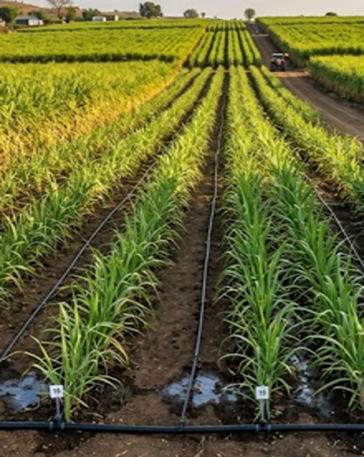
- Focus: This stage starts after the stalks have grown to their eventual height and width. This is very much a fattening of the stalks, with high sucrose accumulation after they have reached full maturity. A purposeful mixture of nutrients and water at this point enhances the sweetness of the sugarcane.
- Nutrients: In this phase, sugarcane needs reduced nitrogen with higher potassium for proper fertigation. It is advised that irrigation follow a consistent schedule, with sugarcane irrigated once or twice a week, or whenever required, as per the moisture sensors.
Irrigation and Fertigation Synchronisation
- Fertigation should follow the irrigation cycle : Fertigation is introduced through the drip irrigation system, and tends to follow the irrigation cycle for sugarcane. Much like fertilisers, sugarcanes need to be irrigated lightly during germination, more around the tillering phase, and most during the grand growing phase, before tapering off at the mature level before harvest.
- Avoid fertigation during heavy rainfall : it is recommended to avoid fertigation, much like irrigation, during heavy rainfall. Since the water is already within the plants’ reach, there is no need for excess water, and any fertigation during heavy rainfall will not help the plants, as the nutrients will just be washed away by the rain.
- S Resume after soil moisture stabilises : Once the rainy season is over or rain has lowered, fertigation can be started again as per the requirements in accordance with the growth stage. The soil must dry enough to accommodate fertigation, and once it does, the previous schedule can be followed again. The soil has to stabilise after the rain to resume.
Best Practices for Maximum Efficiency
Any fertilizer used in the system should be completely water-soluble and chloride-free to ensure healthy sugarcane growth and to prevent damage to the crop. Proper filtration rate and system maintenance must be maintained throughout the fertigation duration to avoid clogging. Electrical conductivity (EC) and pH values must be monitored, and solutions applied should issues arise. The drip irrigation system should be flushed regularly and cleaned periodically. The fertiliser's water solubility will make it easier to distribute through the drip irrigation system.

Common Mistakes to Avoid
- Over-application of fertilisers : Over the duration of the growing of the sugarcane, nutrient needs and amounts will differ. If too much of a compound that is not required at that point is delivered to the plants’ root zones, then they will not take in the nutrients. If the exact nutrient is required but delivered in abundance, the plants might try to overcompensate and absorb too much, which could destabilise their growth. So, over-application of fertilisers to achieve an even bigger yield usually doesn't work out.
- Irregular scheduling : If the sugarcane plants are irrigated and fertigated irregularly, then the whole harvest will be compromised. They need to be irrigated and fertigated for the approved durations, which vary by growth phase. Irrigating can be twice a week to every two weeks, depending on the plant's needs. What will be enough for one phase may not be enough for another, so scheduling needs to reflect this change as well.
- Ignoring crop stage nutrient demand : What is more important for the plant at a certain phase of its growth has to be catered to. Ignoring crop-stage nutrient demands is only going to stress the plants and result in a subpar harvest. If a drip irrigation system is utilised for fertigation, then it must be done properly; it will not be worth it.
- Poor system maintenance: The drip irrigation system has to be maintained well throughout the harvest cycle, checking periodically if there is any clogging, whether there are any pressure requirements and if there is a schedule to maintain the system perfectly. The good harvest you are looking for is what you want, and it is best that you do everything by the book to achieve it.
Benefits of Proper Fertigation Scheduling
Having a proper fertigation schedule in sugarcane farming has many benefits. They are
- Higher yields : A proper fertigation schedule will help you with an up to 50% increase in yield with a drip system. It will help sugarcane grow and expand at the right times, resulting in much sweeter, juicier stalks.
- Improved sucrose content : Once the sugarcanes have reached maturity properly, they can be fed a mixture of fertilisers and water for long durations, which, with intense sunlight, will make your sugarcanes have higher sucrose levels.
- Reduced fertiliser wastage : Since only the exact amount of fertilisers that are required is put into use, there is going to be a significantly high fertiliser efficiency and a reduction in fertiliser wastage up to 25-30%.
- Extended ratoon life : With efficient water and fertiliser distribution, the ratoon life of sugarcane, wherein one root can support many cycles of harvest, can be extended to the maximum level possible.
- Lower labour and operational costs : With the drip irrigation system taking care of both irrigation and fertigation, there is less requirement for labour and overall operational costs to run the sugarcane cultivation.
Customised fertigation plans :
Netafim, one of the most advanced and comprehensive agro product manufacturers and sellers in India and worldwide, has the ability to provide you with customised fertigation plans that would work especially well for your particular piece of land. They will take into account the land slope, the type of soil, the type of water source, and how best to plan the system around these factors.

Advanced drip systems for uniform distribution :
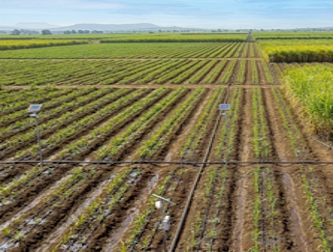
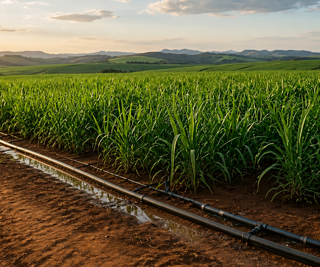
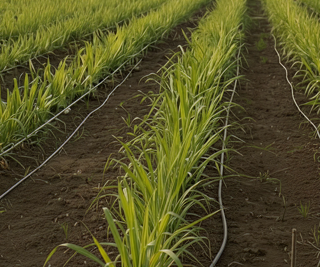
Netafim has many advanced drip irrigation and fertigation systems that will provide uniform distribution for each of your sugarcane plants. This drip system will handle a scheduled irrigation and fertigation timeline that supports the varied growth phases of a sugarcane plantation and can cover a large area simultaneously.
C. Grand Growth Stage (120–270 Days)
Netafim possesses a huge amount of compatible products and technology that could help you automate the irrigation and fertigation process in your field, leading to a completely new digital farming integration that will let you have real-time data and knowledge about moisture levels and nutrient needs at any time..
D. Expert agronomic support :
Netafim also has professional installation teams who can provide expert agronomic support in both the installation of your drip system and the proper management of the same. This team of experts will provide the best calibration for your field and ensure you are left with the best drip system possible.
Conclusion
Having a good, followable and proper fertigation schedule for your sugarcane fields will, without a doubt, give you the full yield potential that your crops have. Your plants will grow well, become huge, tall, sweeter, and more with the application of a correct schedule, and you will reap the benefits without any worry. Get the best drip system as soon as possible and save money on fertilisers, energy, water, and your land itself.


COMMENTS
We'd love to hear your thoughts! To enter a comment, type your name and email address.