

Subsurface Drip Irrigation (SDI) for Sugarcane: Why should farmers adopt it?
The importance of water management in sugarcane farming cannot be overstated. If you grow sugarcane or plan to, you definitely know that it grows in three basic phases, each with different irrigation and nutrient needs. Sugarcane is also a long-duration crop with high irrigation needs, requiring annual rainfall of 1100-1500 mm for a good harvest. Sugarcane also takes 10-18 months to reach full maturity for harvest, depending on the sugarcane variety. These are very specific, high-pressure needs that must contend with issues such as water shortages, rising input costs, and uneven irrigation, which can result in a poor harvest and a loss of your investment. However, rather than waiting and using traditional irrigation methods such as flooding and rainfall, you can opt for a more controlled subsurface drip irrigation system as a modern, efficient solution.

What is Subsurface Drip Irrigation (SDI)?
- SDI in simple terms : Subsurface Drip Irrigation means that the drip irrigation is done by subsurface pipes. In drip irrigation, the water is delivered to the root zones of the plants. In subsurface drip irrigation, the pipes are placed a few centimetres below the soil surface to better access the root zone. This works exceptionally well for plants with a larger, deeper root zone, such as sugarcane.
- How it works : The subsurface drip irrigation system works by attaching pipes to the main waterline pipes and then burying them in the ground a few centimetres below the soil surface. This increases the reach of the droplets delivered by emitters or drippers and helps the plant receive the required amount of water. Drip irrigation systems can also be fully automated, so the water can be delivered directly to the root zones on schedule.
- Comparison : Traditional irrigation methods, such as flood irrigation or being dependent on seasonal rains, are systems that cannot be controlled, nor can they be managed easily. Surface drip systems, on the other hand, are far easier to use and operate, enabling the farmer to save money on water, power, fertilisers, and labour. It is also a significantly smarter investment for a sugarcane farmer.
Why Sugarcane Needs Efficient Irrigation
- High water requirement of sugarcane : Sugarcane is usually categorised as a thirsty plant, requiring a high amount of irrigation throughout its long duration of growth. Sugarcane can take anywhere between 10 and 18 months at a time to reach full maturity. It also needs 1,100 mm to 1,500 mm of annual rainfall to meet all its requirements. That is a lot of water for a long period of time. Efficient irrigation methods, such as drip irrigation, help ensure that plants receive sufficient water and meet their nutritional needs.
- Common issues with traditional irrigation methods : There are certain common issues that any farmer is going to face is they use traditional irrigation methods, such as flooding or depending only on the rainy season.
- Water wastage : Since the root zone of a plant can absorb only so much water and nutrients at a time, flooding the whole field does not actually increase their absorption rates. Rather, quite a bit of the water is completely wasted and cannot be reused.
- Uneven distribution : The system of flooding or manually watering the plants with pipes or buckets can lead to uneven distribution. There is no calculation or measurement of how much water one portion of the field receives compared to another, nor is there a maintained grid system to ensure every plant is irrigated.
- Soil erosion : Repeated flooding can lead to soil erosion, which can effectively dismantle the topsoil of any farm or field, depleting the nutrients already present in the soil. It can even change the field's topography, creating pits that collect water where it shouldn't or eroding soil on the other end of the field. If you are a modern farmer, precision irrigation is a must.
Key Benefits of SDI for Sugarcane Farmers
A. Water Savings :
Subsurface drip irrigation or SDI exponentially lowers the amount of water used, bringing the amount down to only what is required. As a sugarcane farmer, you know that your plants need a lot of water. Using SDI helps you maintain water efficiency and saves you water costs. Since the water is delivered directly to the root zone, as close to the soil as possible, the plants are better able to absorb water and nutrients with much greater ease, and the delivery speed ensures they are neither overwhelmed nor left stressed.
B. Higher Crop Yield:
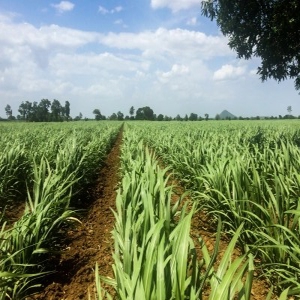
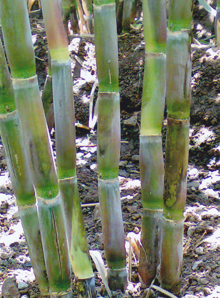
SDI systems help you in controlling the moisture levels in your fields. Better moisture control leads to healthier crops, particularly in sugarcane. Sugarcane grows in three phases, each with different irrigation needs. There is the first phase, where water is required at a nominal amount; the grand growth phase, where water is required up to 2 days per week; and, lastly, post-maturity, where the plants are best kept near stress with minimal water every 2 weeks. Following this schedule will ensure your plants grow well and yield more.
C. Improved Fertiliser Efficiency
Fertigation through SDI reduces nutrient loss, as the nutrients are absorbed quickly right from the root zones. Better plant absorption results in fertiliser efficiency at its maximum, with no excess or waste that could run off or leach into groundwater. Only the necessary amount of fertiliser is utilised.
D. Reduced Weed Growth
Since no excess fertilizer or water is provided in the space between the plants, the surface remains basically dry, limiting weed development and removing the risk of the weeds leaching off water and nutrients.
E. Lower Labour Costs
With an SDI, less manual irrigation work is required. The whole system can be automated, and with added sensors and monitors that feed real-time data to the farmer, they can handle many tasks remotely without having to splurge on too many workers. This also means that it becomes far easier to manage the farm
F. Long-Term Cost Benefit
As a farmer who plans to cultivate for a long time, consider the initial investment vs. the long-term savings you can make from this one-time investment. Subsurface drip irrigation systems have a high return on investment over time, as they effectively improve yield and reduce other farm-related costs such as water, fertiliser, labour, power, and more.
How SDI Works in Sugarcane Fields
- Layout of pipes below the soil : SDI have lateral pipes that lie along the rows of the crops and are usually buried 4-8 inches below the surface. This is mostly because sugarcane has a larger, deeper root system than most other row crops, and placing the lateral pipe below the soil surface helps better reach the root zone.
- Role of emitters in water distribution : Emitters are placed along the lateral pipes, which can be controlled via automation and digital links. The water will be delivered at the appropriate time, at the appropriate speed, at the appropriate depth, using these emitters or drippers, and will properly irrigate the whole field.
- Depth and spacing for sugarcane crops : The lateral pipes are usually placed under 4-8 inches in the soil, and spacing between the rows will depend on whether the pipes are applicable for one row or twin row. One lateral is placed beside each row in a single row, and for a twin row, one single pipe can support two rows. Pipes are spaced approximately 1.5 meters apart.
- Importance of proper design and installation : The kind of soil that is present in a field, what is the water source, the kind of filter required, and whether the land is elevated, whether there is requirement of pressure compensating pipes due to the area of the farm, all of these thing need to be kept in mind to install a system with the proper design. If the design and the actual land do not align, the plants will not be irrigated properly.
Suitability of SDI for Indian Farming Conditions
- Relevance in water-scarce regions : Using SDIs for regions that are already facing water scarcity and are making cultivation or farming of any kind very difficult is a smart investment on the part of the farmer. Using an SDI ensures that the farmer reduces his operational costs while increasing his yield with less water.
- Works well in different soil types : Sugarcane grows the best in loamy soil. This could be clay loam, sandy loam, or another type of loam, with a fixed moisture level and amenable to fertigation at different growth stages. They also tend to grow well in tropical and subtropical climates, and many Indian states meet this requirement.
- Government support and subsidies : The government offers subsidies that cover the purchase of a drip irrigation system, whether that be a surface one or a subsurface one. Installation teams are also available from reputable companies, such as Netafim, and there is additional state-specific support for farmers.
- Growing adoption among progressive farmers : More and more farmers are taking on SDI to farm their sugarcane. Sugarcanes are long-duration crops that require support through different growth stages, each with distinct nutrient and irrigation requirements. An SDI makes the whole experience far less taxing and helps the farmer save money. In water-scarce areas, it is particularly important to use.
Common Concerns and Misconceptions
A. High Initial Cos
The high initial cost of purchasing an SDI and installing it properly might come across as too high a cost, but the benefits from utilising such a system are many. The long-term benefits of an SDI can help your farm achieve higher yields, with greater sugar recovery and even lower costs for labour, water, fertiliser, energy, and maintenance. Using an SDI, you can even increase the ratoon of a sugarcane field to 4-5 times, curbing planting costs by a lot.
B. Maintenance Issues
An SDI has to be maintained properly with regular proper filtration and system care, so that the pipes don't get clogged up and stop working. The maintenance falls to the farmer, and it is on them that the system continues to work for a long time without any problem. Periodic backwashes will address much of the clogging, and the information from monitors and sensors must be closely monitored.
C. Technical Knowledge
Once an SDI is set, not too much technical knowhow ius required to run the system. So long as the main objectives are understood and the system's description is clear, anyone can run it. There is even support from suppliers and experts who can provide training and teach the proper ways to run it.
Best Practices for Using SDI in Sugarcane
- Proper system design and installation : The system has to be designed with full cognition of any issues or special circumstances that the plot of land might present. Factors such as elevation, field area, water source, etc., must be accounted for in the design and eventual installation.
- Regular maintenance and flushing : You have to take the lead in maintaining the system and ensure that the pipes are flushed regularly so that they don't get buildup and don't become blocked. An SDI is an amazing system, but it must be properly maintained to last a long time.
- Monitoring water and nutrient supply : Sugarcane needs a specific amount of nutrients and water at different stages of its growth, not to mention the nutrients itself has to be changed in accordance with the phases. That is something the farmer will have to ensure works properly.
- Choosing quality equipment : An SDI system is only as good as the products used. Buying from a good company that has been in the market for years and manufactures products with the latest technology is the best bet. Netafim is one such company, and since their products are so fully compatible with each other, it makes for a smart choice.
Case for Adoption: Why Now is the Right Time
Right now is the right time to buy and install an SDI due to rising water scarcity. No matter where we are, access to water is decreasing a lot. An SDI is one way to counter this problem. The need for sustainable farming has never been greater than now, as everyone must make adjustments to conserve resources. Using an SDI also provides significant support against rising input costs, which continue to increase each year. And in spite of all these problems, the demand for higher productivity is near incessant. So an SDI system will help you use whatever resources you have, produce higher yields, and save you money.
Conclusion
In conclusion, a subsurface drip irrigation system will help your sugarcane grow well, with high sucrose content and high sugar recovery. You will be able to utilise water and nutrients to maximum efficiency, and save money on operational costs for labour, power, water and fertilisers. This is the perfect solution for growing long-duration crops like sugarcane, which require substantial water and nutrients. If you grow sugarcane, then it is time you get yourself a brand new SDI to get the best benefits of better yield, savings, and sustainability.


COMMENTS
We'd love to hear your thoughts! To enter a comment, type your name and email address.